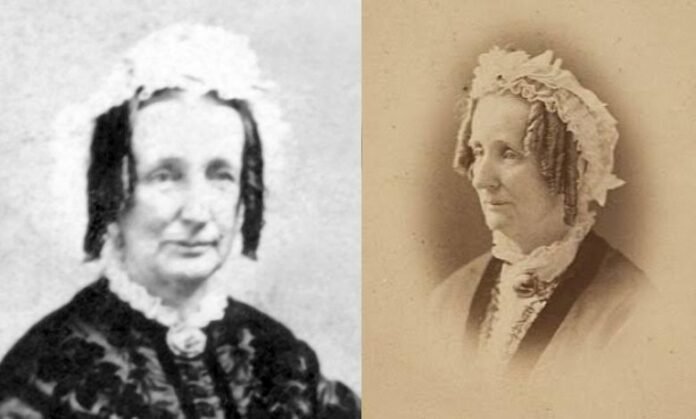


Charity Hallett was the first wife of Phineas Taylor Barnum, the American showman, museum proprietor and entertainment promoter known as P. T. Barnum. Born on October 28, 1808, she married Barnum in 1829 and remained his wife until her death in 1873. Their marriage lasted approximately 44 years and produced four daughters.
Her life covered a period of considerable change in the Barnum household. When they married, Barnum was a young businessman whose work centered on retail and lottery sales. During the following decades, his museum, international tours and other enterprises brought the family wealth, travel and financial uncertainty.
Charity’s biography is best understood through her work before marriage, her children, the family’s homes and surviving correspondence. These records provide a more useful account of her life than descriptions that simply present her as the wife of a famous entertainer.
Table of Contents
Charity Hallett Profile Summary
| Field | Details |
|---|---|
| Full name | Charity Hallett |
| Married name | Charity Barnum |
| Date of birth | October 28, 1808 |
| Year of death | 1873 |
| Age at death | 65 |
| Occupation before marriage | Tailoress |
| Husband | Phineas Taylor Barnum |
| Marriage date | November 8, 1829 |
| Marriage location | New York City |
| Marriage duration | Approximately 44 years |
| Children | Caroline Cornelia, Helen Maria, Frances Irena and Pauline Taylor |
| Burial | Mountain Grove Cemetery, Bridgeport, Connecticut |
Charity Hallett’s Early Life and Work
Charity Hallett’s connection with Bethel, Connecticut, began before her marriage to Barnum. Historical accounts identify her as a tailoress working in the village. This occupation is one of the clearest details about her independent life before she became part of the Barnum family.
A tailoress worked in garment making, a skilled occupation requiring practical knowledge of sewing and clothing construction. The description establishes that Charity had paid work before marriage. It does not, however, establish that she owned a tailoring business or employed other workers, and those claims should not be added to her biography.
Barnum’s autobiography places their early relationship within his own working life in Bethel. At the time, he was pursuing commercial opportunities rather than managing the large entertainment enterprises associated with his later career. Charity therefore knew him before his national and international reputation developed. His recollections are useful evidence of their acquaintance, although they describe events from his perspective.
Nia Novella Travilla Biography: William Travilla’s Daughter and Family
Charity Hallett’s Marriage to P. T. Barnum
Charity Hallett and P. T. Barnum married in New York City on November 8, 1829. Charity had recently turned 21, while Barnum was 19. Their marriage began when both were young adults, several years before the birth of their first daughter and more than a decade before his American Museum became a major attraction.
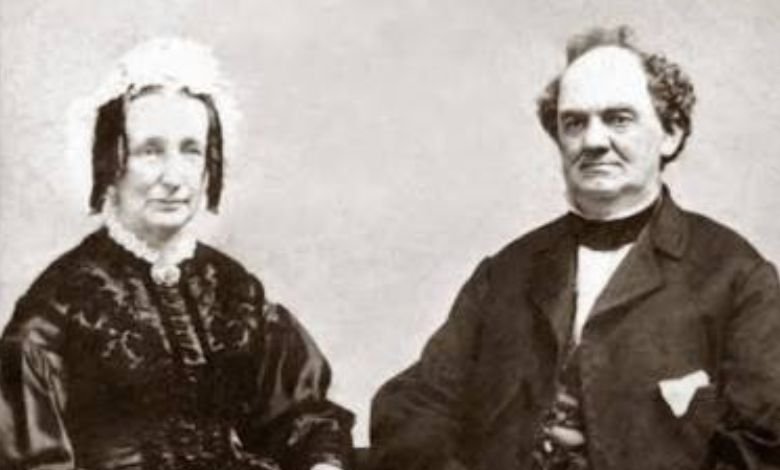
According to Barnum’s account, he proposed during the summer of 1829. Charity traveled to New York in October to visit her uncle, Nathan Beers. Barnum followed in November, combining the journey with the purchase of goods for his store. The Reverend Dr. McAuley performed their wedding ceremony in the presence of Charity’s relatives and friends.
After the wedding, the couple returned to Bethel. Barnum wrote that they boarded with the family where Charity had previously lived. Their first married home was therefore a boarding arrangement, a considerable contrast with the large Bridgeport residences they occupied later. The wedding account also shows that their relationship began within an existing network of relatives, acquaintances and local business connections.
Charity Hallett’s Early Married Life
The opening years of Charity’s marriage belonged to Barnum’s Connecticut business period. He operated a store and participated in lottery sales before turning entertainment into his principal occupation. These early activities are relevant because they explain the household’s circumstances before the family became associated with museums, touring performers and elaborate homes.
Barnum also entered newspaper publishing, producing the Herald of Freedom during the early 1830s. His outspoken editorial work brought legal disputes, including imprisonment for libel. These events formed part of the environment in which the marriage developed, although surviving accounts do not justify assigning Charity specific opinions about his newspaper or political arguments.
Their eldest daughter, Caroline Cornelia, was born in 1833. The family subsequently became connected with New York as Barnum pursued new work. The change in location accompanied a broader shift in his career, but Charity’s biography should distinguish those developments from her own activities. Marriage to an entrepreneur does not by itself establish responsibility for his business decisions.
Charity Hallett’s Four Daughters
Charity Hallett and P. T. Barnum had four daughters: Caroline Cornelia, Helen Maria, Frances Irena and Pauline Taylor. Their children were born between 1833 and 1846, spanning a period in which Barnum’s work changed substantially. The daughters’ lives also extended the family’s connections through marriage and later generations.
Caroline Cornelia was born in 1833, Helen Maria in 1840, Frances Irena in 1842 and Pauline Taylor in 1846. Frances died in 1844, before her second birthday. Caroline, Helen and Pauline survived into adulthood, meaning Charity experienced both the early death of a child and the establishment of adult households by her surviving daughters.
Some summaries create confusion by listing Caroline Cornelia and Caroline Cornelia Thompson separately. They were the same person: Thompson was Caroline’s married surname. Charity had four daughters, rather than five children represented by those overlapping names. Maintaining that distinction is essential to an accurate family summary.
Charity Hallett’s Daughter Caroline Cornelia
Caroline Cornelia Barnum was Charity’s eldest child. As the first daughter, she appears frequently in accounts of the family’s earlier years and in correspondence concerning education. Her childhood overlapped with the development of Barnum’s museum business and his expanding travel schedule.
The Barnum Museum’s discussion of family letters describes Caroline attending boarding school in Washington, D.C., during the 1840s. French language instruction was an important part of the educational plan. Letters addressed to her also discussed study habits and opportunities to observe the proceedings of Congress, providing specific evidence of the education available to her.
Caroline married David W. Thompson in 1852. She is consequently identified in historical records as Caroline Barnum Thompson or Caroline Cornelia Thompson. Her surviving diaries are particularly valuable because they add a daughter’s perspective to a family history often told through Barnum’s autobiography. The Bridgeport History Center’s collection includes diaries covering 1848 and 1850–1851.
Charity Hallett’s Daughters Helen, Frances and Pauline
Helen Maria Barnum, born in 1840, was Charity’s second daughter. Her name appears in family correspondence alongside Caroline’s, including letters discussing the children’s health and everyday matters. She later married Samuel H. Hurd and, subsequently, William Harmon Buchtel. Her adult life formed part of the family’s connection with Colorado.
Frances Irena Barnum, the third daughter, was born in 1842 and died in April 1844. Her short life belongs in any complete account of Charity’s children. Although the dates establish a significant family loss, they do not provide a basis for reconstructing Charity’s private thoughts or describing particular conversations about the death.
Pauline Taylor Barnum was born in 1846 and married Nathan Seeley in 1866. She died in 1877, several years after Charity’s death. Caroline and Helen lived into the twentieth century. These different lifespans help explain why later Barnum family histories contain much more material about some daughters than others.
Charity Hallett’s Family Life During Barnum’s Travels
Barnum’s work frequently took him away from home, particularly during his European tours with Charles Stratton, known professionally as General Tom Thumb. His letters show that family concerns continued alongside negotiations, performance arrangements and museum business. Charity was a recipient of correspondence about children, health, money and plans for their household.
The Barnum Museum’s published guide to the letters identifies discussions about Charity’s pregnancy, Caroline’s schooling and Helen’s health. Other letters concern furniture, property and Barnum’s return to America. These subjects give the marriage a practical historical setting: family decisions had to continue while one spouse was working across the Atlantic.
The correspondence also records homesickness, disagreement and uncertainty. These details resist any simple description of the marriage as either permanently harmonious or defined entirely by conflict. A letter captures a particular exchange at a particular time. Read together, the records show a long relationship involving affection, decisions, competing preferences and periods of separation.
Charity Hallett and the Barnum Family’s Homes
The Barnum family’s changing homes reflected the growth of Barnum’s income and ambitions. Their early boarding arrangement in Bethel was followed by much larger residences in Bridgeport. The best-known of these was Iranistan, an elaborate house constructed in 1847–1848.
Iranistan became a prominent architectural expression of Barnum’s success. Its appearance survives in historical prints, including an image held by the Library of Congress. For Charity’s biography, the house provides evidence of the family’s material circumstances during the middle of the marriage, rather than proof that she shared every aspect of Barnum’s architectural taste.
The family later occupied Lindencroft and Waldemere. The Bridgeport History Center associates Lindencroft’s gardens with Charity’s enjoyment of gardening. It also connects the choice of a seaside setting for Waldemere with medical advice concerning her health. These details offer a more personal connection between Charity and the family’s residences than their size or expense alone.
Waldemere was built in 1869 in Bridgeport’s South End. Charity lived there during the closing years of her marriage, while Barnum continued traveling. The succession of homes places her adult life firmly within Bridgeport’s nineteenth-century history and shows how family arrangements changed as the couple grew older.
Charity Hallett’s Life Alongside Barnum’s Entertainment Career
Charity’s marriage covered several distinct stages of Barnum’s working life. The American Museum, international performance tours and his eventual circus venture belonged to different periods. Treating them as a single continuous circus career obscures the circumstances in which Charity and their daughters lived.
Barnum’s American Museum was a major part of his business during the middle decades of the marriage. It combined collections, performances and attractions designed to draw large audiences. His overseas journeys were connected both with touring and with obtaining material or making arrangements for the museum. Family correspondence from this period places household concerns beside the demands of an expanding enterprise.
His major traveling circus venture began in 1871, only about two years before Charity died. She therefore lived through its early development, while much of the later history associated with the Barnum and Bailey name occurred after her lifetime. This chronology keeps her biography connected to the correct stage of entertainment history.
Charity Hallett’s Later Years and Health
Historical accounts describe Charity experiencing health difficulties during the later years of her marriage. The Bridgeport History Center links these concerns with the family’s domestic arrangements, particularly the decision to build Waldemere near Long Island Sound. Medical advice about sea air formed part of the explanation for its location.
Charity generally remained at home while Barnum continued his travels. That pattern should be understood as a documented feature of their later household, without turning it into a complete description of her personality. Staying home does not establish an absence of interests, friendships or involvement in family decisions.
By this period, the surviving daughters had married, and the family included grandchildren. Photographs described in the Bridgeport collection show Charity with Barnum and younger family members. Such images establish her presence in the extended family, although they cannot explain her private feelings or supply an account of daily relationships.
Charity Hallett’s Death and Burial
Charity Hallett died in 1873 at the age of 65, ending a marriage that had lasted approximately 44 years. Barnum was overseas at the time. Her death came after the family had moved through several homes, raised four daughters and experienced substantial changes in financial and social circumstances.
Sources disagree about the exact day of her death. The Bridgeport History Center’s collection guide gives November 19, while the Barnum family genealogy gives November 17. Both place her death in November 1873. Using the month and year preserves the agreed chronology without presenting one disputed day as certain.
Charity was buried at Mountain Grove Cemetery in Bridgeport, Connecticut. The cemetery contains other members of the Barnum family and remains an important location in its history. Barnum subsequently married Nancy Fish in 1874, a separate chapter that followed Charity’s death.
Charity Hallett in Historical Records
The evidence for Charity’s life comes from several kinds of records, each offering a different perspective. Barnum’s autobiography describes their courtship and wedding. His correspondence records practical exchanges about children and household plans, while genealogical material helps establish family relationships and dates.
Caroline’s diaries and surviving family photographs broaden that evidence. They allow the household to be examined through more than Barnum’s retrospective account alone. A diary, letter and photograph answer different questions: one may describe an experience, another record a decision, and another establish who was present at a particular gathering.
Charity’s place in history rests on these concrete details. She worked before marriage, became the mother of four daughters, participated in family life across decades of change and lived in several important Barnum residences. Keeping those elements together produces a biography centered on an identifiable person, with her husband’s fame providing context rather than replacing her story.
Charity Hallett FAQs
Who was Charity Hallett?
Charity Hallett was P. T. Barnum’s first wife. She worked as a tailoress before their marriage and was the mother of Caroline Cornelia, Helen Maria, Frances Irena and Pauline Taylor Barnum.
When was Charity Hallett born?
Charity Hallett was born on October 28, 1808. She turned 21 shortly before marrying Barnum in November 1829.
When did Charity Hallett marry P. T. Barnum?
Charity and Barnum married in New York City on November 8, 1829. Their marriage continued until her death in 1873, lasting approximately 44 years.
How many children did Charity Hallett have?
Charity had four daughters. Caroline Cornelia Thompson and Caroline Cornelia Barnum were the same daughter, identified by her married and birth surnames.
When did Charity Hallett die, and where was she buried?
Charity died in November 1873 at age 65. She was buried at Mountain Grove Cemetery in Bridgeport, Connecticut.